Khai Khao
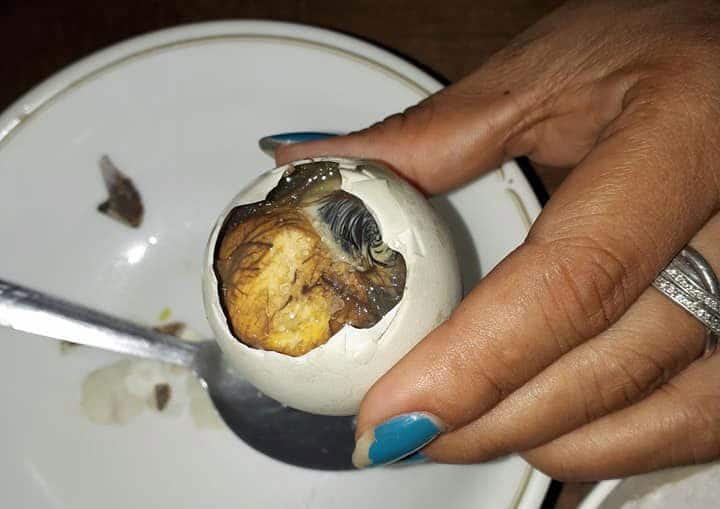
Fertilized egg (chicken or duck) incubated for 14 to 21 days, then boiled or steamed. The fetus is eaten directly from the shell.
29 ฿
Spice Level
Description
Khai Khao, also known as balut in other Southeast Asian countries, is a fertilized chicken or duck egg that has been incubated for 14 to 21 days before being cooked. At this stage of development, the embryo is partially formed with soft bones, emerging feathers and sometimes recognizable features. The egg is boiled or steamed in its shell, then consumed directly, often with salt, pepper, lime juice or a spicy sauce. The texture is unique: the yolk is creamy, the white is gelatinous, and the embryo offers a tender consistency. Rich in protein, calcium and iron, Khai Khao is considered very nutritious and is often consumed as a fortifier. It is a popular snack sold by street vendors, particularly enjoyed in the evening.
History & Origin
The consumption of fertilized eggs is an ancient practice in Southeast Asia, probably originating from China over a thousand years ago before spreading throughout the region. In Thailand, Khai Khao has been consumed for centuries, particularly in rural communities where it represented a valuable source of protein. The name "Khai Khao" literally means "white egg" in Thai. Traditionally, these eggs were naturally incubated under brooding hens, but today they are produced in controlled incubators. Although controversial in some cultures, Khai Khao remains a popular food in Thailand, symbolizing the philosophy of non-waste and complete use of food resources.
Main Ingredients
- Œuf fécondé
- Pepper
- Salt